

Technical articles
What is the working principle of ABB excitation controller module 3BHE017628R0002 PPD115A02 SG579989013?
Date: Nov 23, 2025 Views: 725
In-depth Analysis of the Working Principle of ABB Excitation Controller Module 3BHE017628R0002 PPD115A02 SG579989013
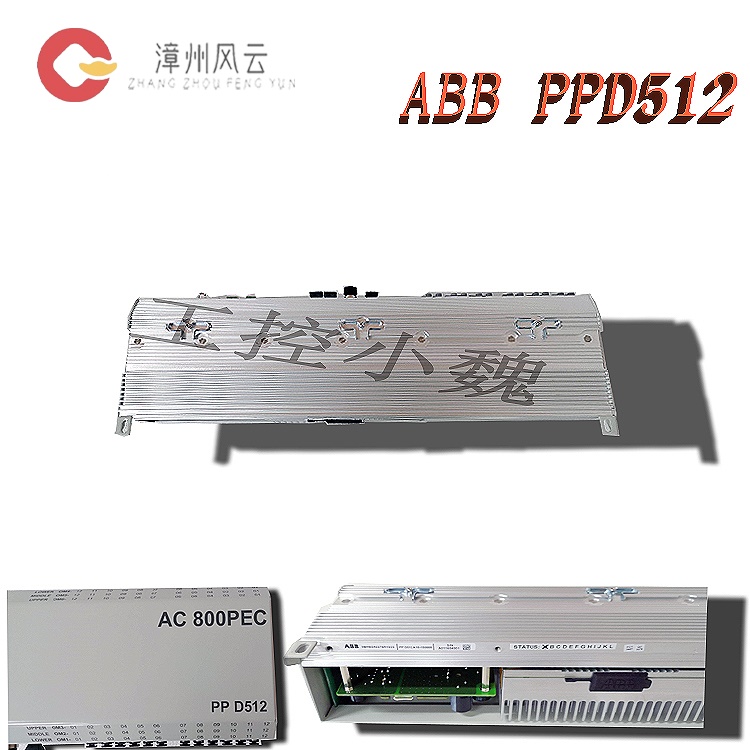
The 3BHE017628R0002 PPD115A02 SG579989013 excitation controller module is a core component of the ABB AC800PEC automation system. Specifically designed for synchronous generator excitation control, it achieves generator terminal voltage stabilization, reactive power control, and dynamic response optimization by adjusting the rotor excitation current. It is widely used in power generation, industrial self-owned power plants, and renewable energy fields (such as wind power and energy storage systems).
Working Principle and Technical Architecture
Core Logic of Excitation Control
AVR (Automatic Voltage Regulation): By monitoring the generator terminal voltage in real time and comparing it with a set value, an adjustment signal is generated to control the excitation power unit (such as the rectifier bridge/IGBT module) to adjust the DC excitation current to maintain voltage stability. For example, when the terminal voltage fluctuates, the module quickly increases or decreases the excitation current to compensate for load changes.
Dynamic Response Mechanism: Employs a high-speed control algorithm (cycle as low as 100 microseconds), supporting millisecond-level response to grid disturbances (such as load surges and short circuits) to prevent voltage instability or abnormal power factor.
Protection Functions: Built-in overvoltage, overcurrent, and overheat protection mechanisms automatically cut off the excitation power supply or trigger Safe Torque Stop (STO) upon activation, complying with industrial safety standards such as API 670.
Hardware and Communication Design
Processor and I/O: Equipped with a high-performance processor (such as a 750 MHz RISC architecture), supporting multi-channel signal processing and complex logic operations. Modular design supports expanded I/O modules (such as analog/digital inputs and encoder interfaces) to adapt to different application requirements.
Communication Protocols: Compatible with industrial protocols such as PROFIBUS DP, Modbus TCP, and EtherNet/IP, integrating with DCS/PLC, HMI/SCADA systems, and third-party devices (such as Bently Nevada sensors) via fiber optic or Ethernet.
Redundancy and Reliability: Supports dual-link redundancy, power supply redundancy, and failover mechanisms to ensure that a single point of failure does not affect system operation; industrial-grade design (IP20 protection) adapts to a wide temperature range of -20°C to +60°C.
Core Control Logic and Functional Positioning
This module belongs to the high-performance excitation control unit in the ABB AC800PEC system. Its core function is to achieve generator terminal voltage stability, reactive power control, and power factor optimization by precisely adjusting the generator excitation current. Its working principle is based on the following key mechanisms:
Closed-Loop Control Architecture: Employs a voltage/reactive power closed-loop feedback mechanism, dynamically adjusting the excitation current to maintain target parameters by real-time monitoring of generator terminal voltage, current, and system frequency. Supports multiple control modes such as constant voltage (AVR), constant power factor, and constant reactive power, adapting to different operating scenarios such as grid-connected and islanded systems.
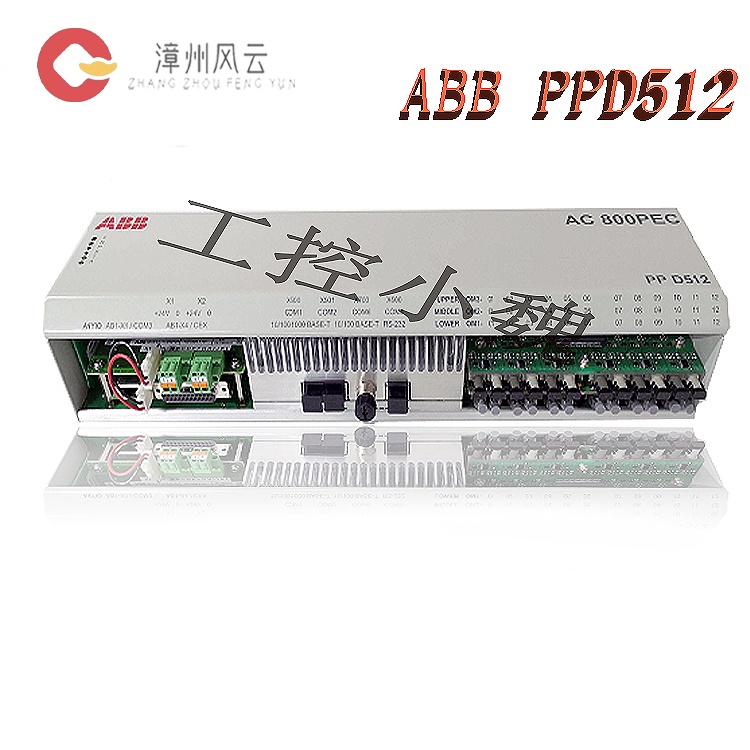
Power Electronic Conversion: Integrates power electronic devices such as IGCT/IGBT, converting AC power to DC excitation current through a thyristor rectifier bridge (such as the UNITROL series), achieving high-precision current control (error ≤ ±1%). Conversion efficiency exceeds 98%, with a response time ≤100μs, meeting the requirements for rapid dynamic adjustment.
Multi-protocol communication: Supports industrial protocols such as Modbus TCP, PROFINET, and EtherCAT, enabling seamless integration with DCS/PLC, HMI/SCADA systems, and third-party devices (such as Bently Nevada sensors) for data exchange and remote monitoring.
Signal processing and algorithm implementation:
Signal acquisition and processing: Collects parameters such as generator terminal voltage, excitation current, and system frequency through built-in sensors (e.g., voltage/current transformers). After filtering and amplification, these parameters are sent to the processor for digital processing. A high-speed ADC (sampling rate ≥10kHz) ensures signal accuracy.
Control algorithm: Based on PID, adaptive control, or fuzzy logic algorithms, combined with MATLAB/Simulink models, parameter optimization is achieved. For example, real-time adjustment of PID parameters can address load fluctuations, or fuzzy logic can be used to handle nonlinear system characteristics.
Protection and diagnostics: Built-in overvoltage/overcurrent protection, underfrequency/overfrequency protection, rotor cooling integration, and other functions. When an anomaly is detected, an alarm is triggered or automatic switching to a backup channel is initiated, and the source of the problem is located via fault codes (e.g., ERR/BUS alarms corresponding to communication or module failures).
System Collaboration and Expansion Capabilities
Modular Design: Works collaboratively with processor modules (e.g., PM866K01), I/O modules (e.g., S800 series), and communication modules in the AC800PEC system, achieving high-speed data exchange (bandwidth ≥ 1Gbps) via backplane or fiber optic links. Supports hot-swapping and redundant configuration, improving system reliability.
Software Ecosystem: Compatible with the ABB System 800xA platform, supports IEC61131-3 programming (e.g., ladder diagrams, structured text) and MATLAB/Simulink model deployment, achieving seamless integration from simulation to implementation.
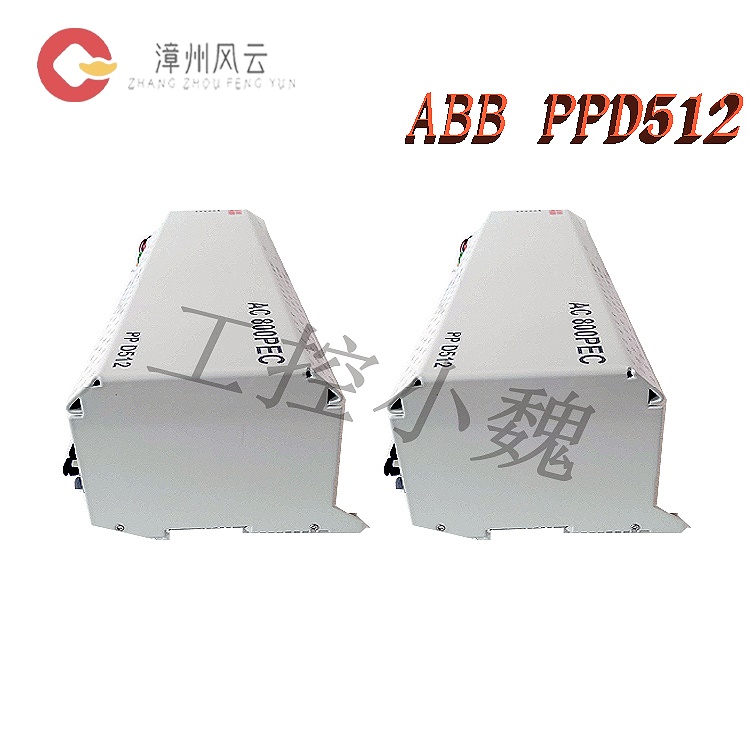
Expansion Interfaces: Provides USB, Ethernet interfaces, and dedicated expansion slots, supporting connection to peripheral devices such as expansion gate controllers (EGCs) and pulse transformers to achieve functional expansion (e.g., adding tension control, position control, etc.).
Environmental Adaptability: Adopts IP20/IP67 protection design, operating temperature range -40℃ to +70℃, suitable for harsh industrial environments (for explosion-proof areas, select the -CN suffix model).
Safety and Maintenance Mechanisms
Safety Standards: Complies with industrial safety standards such as API 670 and IEC61131-3, and integrates a Safe Torque Stop (STO) function to ensure rapid disconnection of excitation current in case of fault or emergency.
Maintenance Features: Supports online firmware updates, remote diagnostics, and firmware rollback. The module has built-in self-diagnostic functions, which can monitor parameters such as voltage, temperature, and communication status in real time, and generate maintenance reports through HMI or SCADA systems.
Redundancy Design: Supports a dual-channel redundant architecture, automatically switching to the backup channel when the primary channel fails, ensuring continuous system operation. Redundant power supply design (e.g., 24V DC/120V AC) further ensures power supply stability.
Typical Application Scenarios
Power Energy: Realizes generator excitation control in thermal power, hydropower, and wind farms, optimizing voltage stability and reactive power distribution.
Industrial Automation: Used for tension control, speed control, and position control in production lines of industries such as metallurgy, petrochemicals, and papermaking.
Infrastructure: Ensures the reliability and efficiency of power supply in rail transportation, port machinery, and marine power systems.
Technical Advantages and Features
High-Precision Control: Employs high-precision sensors and measurement circuits to achieve precise regulation of excitation current/voltage.
Adaptive Algorithm: Supports adaptive adjustment, optimizing generator performance under different operating conditions (such as load changes and temperature fluctuations).
Modular Design: Facilitates integration into distributed control systems (DCS), supporting flexible expansion and maintenance.
Self-Diagnostic Function: Provides comprehensive fault diagnosis and condition monitoring, reducing maintenance costs.
Summary: This module achieves precise regulation of generator excitation and system protection through advanced control algorithms, efficient power electronic conversion, and flexible system coordination. Its modular design, high reliability, and compatibility make it a core solution for industrial automation and energy management.
Recommended models:
PVD164A2059 3BHE014340R2059
PFXA401 3BSE024388R1
RED670 1MRK002810-XE
RED521 1MRK002003-BA
REC670 1MRK002814-AC
REC670 1MRK002814-AB
REC650 1MRK008514-CB
REC650 1MRK008514-AA
REB670 1MRK002820-AC
RF533 3BSE014227R1
RB520 3BSE003528R1
UCD846A101
UDD847A101
PPD117A3011
3BHE020455R0103
3BHE040375R1023
PPD103B103
PPD512A10-150000
PPD512A10
3BHE040375R103E
3BHE039724R0C3D
3BHE041576R3011
GFD563A102 3BHE046836R0102
GF D563 3BHE046836R0101
PPE091A101
3BUR001401R1
PU512V2
PU515A
PU515A 3BSE032401R1
RC527 3BSE008154R1
3BHB009885R0013 S-093M
3BHB009885R0052 S-097H
3BHB009885R0063 S-093M
3BHB009885R0005 S-093H
3BHB009885R5311 S-093R
35SHY3545L0014 S-073N
3BHB009884R0021 S-073N
3BHB009885R0052 S-097H
3BHB030478R0309 S-093H
3BHB012897R0003 S-053M
S-073N 3BHB009884R0021
3BHE041430R0001 ABB
3BHE041429R0001 ABB
3BHE041418R0001 ABB
3BHE041414R0001 ABB
3BHS393721 E01 ABB
3BHS600000 E40 ABB
3BHS606571 E49 ABB
3BHS537463 E72 ABB
3BHS600000 E87 ABB
More......
RELATED ARTICLE
Address
Room 205, Office Building, No.1 Chaoyang North Road, Longwen District, Zhangzhou City, Fujian Province
fengyunfadacai@qq.com
Sales consultant
Miss.Green
+86 15860249102