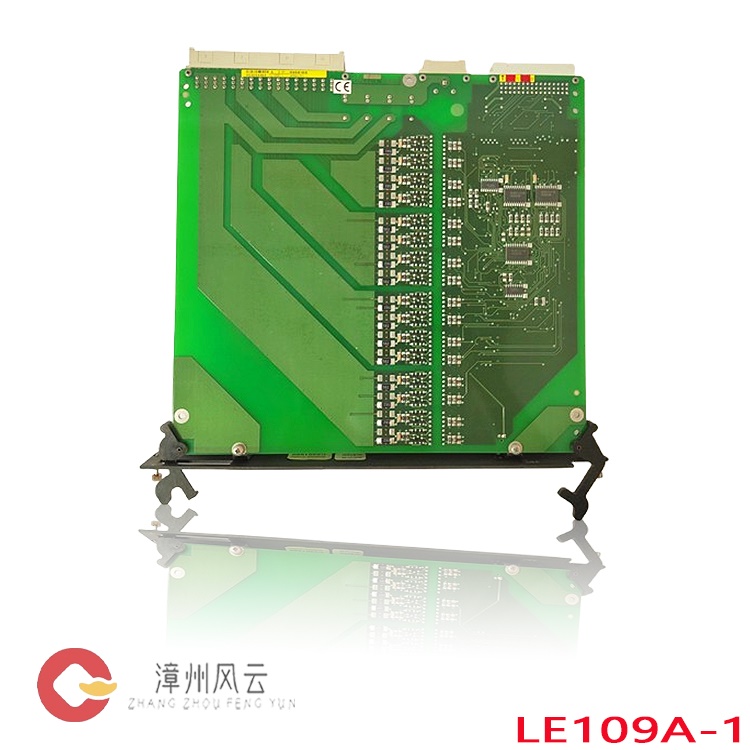
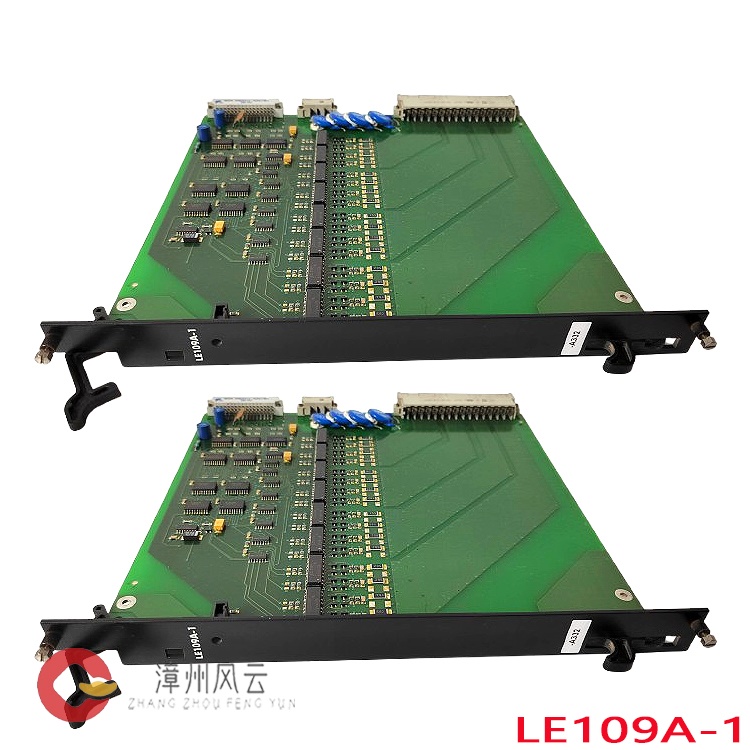
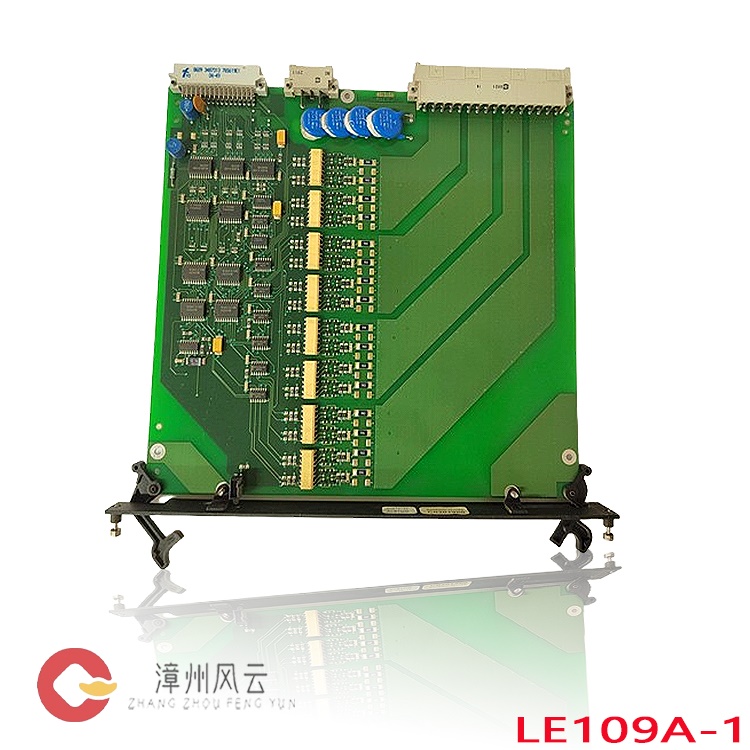
This is an industrial-grade Power Interface Board developed by Alstom specifically for VMEbus-based control systems and the BGTR 8HE chassis architecture. As a core component for DCS, steam turbine control, and rail transit control systems, it handles AC input conversion, electrical isolation, power distribution, EMI filtering, and backplane bus power interfacing. It serves as the central hub for providing stable power to processor modules, I/O cards, and communication modules within the VME rack. This board is widely used for replacing spare parts in legacy Alstom control systems and for the retrofitting of industrial control systems.
Many products have not yet been listed online; please contact us for information on additional items.
If there is a discrepancy between a product model and its displayed image, the model number shall take precedence. Please contact us if you would like to see specific product photos; we can arrange for them to be taken at our warehouse for your confirmation.
We operate 76 shared warehouses globally, so it may occasionally take a few hours to provide you with an accurate response—we appreciate your patience. Rest assured, we will address your inquiries as quickly as possible.
I. Product Overview
The ALSTOM NRD109475 8RDA44670G01 is an industrial-grade Power Interface Board (PIB) developed by Alstom specifically for VMEbus-based control systems and the BGTR 8HE chassis architecture. It serves as a core component for DCS, steam turbine control, and rail transit control systems. Its functions include AC input conversion, electrical isolation, power distribution, EMI filtering, and backplane bus power interfacing. It acts as the central hub for providing stable power to processor modules, I/O cards, and communication modules within the VME rack. This unit is widely used for replacing spare parts in legacy Alstom control systems and for retrofitting industrial control systems.
II. Operating Principle
The core functionality of the NRD109475 8RDA44670G01 is achieved through the coordinated operation of four units: power conversion, isolation and filtering, backplane distribution, and circuit protection.
Power Input Conversion Unit: This unit accepts 220V AC (50/60Hz) mains power, which is then rectified and processed through switching conversion to output a stable 12V DC supply. It complies with VMEbus power specifications, providing regulated DC power to the rack backplane.
Isolation and EMI Filtering Unit: Equipped with internal isolation circuitry and common-mode/differential-mode filter networks, this unit provides electrical isolation between the high-voltage side and the low-voltage VME logic side. It eliminates ground-loop interference and suppresses power grid surges, voltage spikes, and electromagnetic noise, ensuring that sensitive control chips and communication circuits remain free from interference. VME Backplane Power Distribution Unit: Through the VME P2/P0 connectors, the unit interfaces with the BGTR 8HE backplane, distributing regulated DC power evenly to each slot module within the rack. It provides a unified power supply for CPU, I/O, and communication cards, while simultaneously transmitting power status signals.

Fault Detection and Protection Circuitry: Integrated circuits for detecting overvoltage, undervoltage, overcurrent, and short circuits automatically limit current or cut off the output in the event of an overload, short circuit, or abnormal input voltage. Simultaneously, it provides feedback on the fault status, protecting expensive downstream main control modules and preventing cascading damage.
In short, the NRD109475 8RDA44670G01 acts as a "power isolation and conversion hub" within a VME control system. It converts unstable industrial AC power from the field into clean, isolated DC power that complies with VME bus standards, supplying the entire control rack.
III. Product Advantages
High Reliability in Harsh Environments: Designed for a wide industrial temperature range (-20°C to +70°C), the unit is highly resistant to vibration, dust, and electromagnetic interference. It is well-suited for demanding industrial control cabinet environments—such as those found in power plants or rail transit systems—and offers a low failure rate during long-term, continuous operation.
Comprehensive Electrical Isolation and Interference Immunity: Featuring primary-to-secondary isolation, the design eliminates ground loops and ensures a high level of electromagnetic compatibility (EMC). This makes it ideal for control cabinets where high-voltage and low-voltage components coexist, helping to minimize issues such as signal corruption, communication interruptions, and module malfunctions.

Native VME Bus Compatibility: Specifically engineered for the BGTR 8HE 8-slot VME rack, the interface definitions are natively matched. No additional adapter boards are required; the unit can be plugged in directly, resulting in clean, streamlined wiring. It is fully compatible with the Alstom control ecosystem and supports both new and legacy components, making it the preferred choice for retrofitting or upgrading existing systems. Integrated Multi-Layer Safety Protection: Features built-in self-locking protection against overcurrent, short circuits, overvoltage, and undervoltage. In the event of a fault, the unit can be inspected and reset. If a single board fails, its power supply is cut off immediately, protecting other high-value control cards within the rack and reducing maintenance costs.
Unified Integrated Design: Combines power conversion, filtering, distribution, and status acquisition onto a single board. This reduces the need for discrete power modules and isolation transformers, saves space inside control cabinets, and simplifies the wiring complexity of the entire system.
Standardized Industrial Spare Part: As a classic industrial control component from Alstom, it is highly compatible with existing systems in the field, facilitating spare parts inventory management and rapid replacement for power plants and rail transit operators.
IV. Applicable Industries and Functions
1. Thermal Power Generation, Gas Turbines, and Power Plant Automation
Function: Serves as the power supply interface for VME racks in DCS (Distributed Control Systems) and DEH (Digital Electro-Hydraulic) control systems for steam or gas turbines. It ensures a stable power supply for the main control cards responsible for speed regulation, valve positioning, and protection/trip logic. Since power fluctuations can directly compromise unit protection, the NRD109475 8RDA44670G01 provides a continuous, clean, and isolated power supply, ensuring the reliability of regulation and protection loops and mitigating the risk of unplanned outages.
2. Rail Transit (Urban Rail and Locomotive Traction Control Systems)
Function: Acts as a power conversion board for onboard VME control units in trains. Given the significant voltage fluctuations in onboard power grids and intense electromagnetic interference (EMI) from traction systems, the NRD109475 8RDA44670G01’s isolation and filtering capabilities suppress EMI generated by traction converters, ensuring a stable power supply for onboard signaling, traction control, and braking control modules. 3. Heavy Industry Automation, Metallurgy, and Oil & Gas Sectors
Application: Used in conjunction with PLC and VME-architecture control systems for large-scale machinery—such as compressors and heavy-duty drive equipment—housed in control cabinets. It isolates the system from industrial power grid disturbances, ensuring that process control and interlock protection signals remain unaffected by grid fluctuations, thereby safeguarding the continuity and safety of production processes.
4. Power Substations and Hydropower Monitoring Systems
Application: Utilized in VME control cabinets for substation monitoring and turbine speed-governing systems. It isolates the equipment from high-voltage-side interference, ensuring the stable operation of modules responsible for remote signaling, telemetry, and protection-related communications.
Industry Summary: While the NRD109475 8RDA44670G01 does not participate directly in logic operations, it serves as a critical safety barrier for the power supply of the entire VME control system. Its core value lies in isolating interference, stabilizing power delivery, and providing fault protection, ensuring the continuous and reliable operation of high-safety-grade control equipment.
V. Standard Operating Procedures
Prerequisites: Personnel must be qualified as low-voltage electricians or industrial control board technicians, be familiar with VME chassis safety standards, and strictly adhere to anti-static protocols throughout the operation.
Preparation: Prepare an anti-static wrist strap, an anti-static mat, and an insulated screwdriver. Verify that the unit is an ALSTOM NRD109475 8RDA44670G01 . Inspect the board for signs of burning, bulging capacitors, or deformed connector pins. Confirm that it is paired with a BGTR 8HE chassis and that the input power supply is 220V AC.
Power Isolation: Disconnect the main power supply to the control cabinet and implement Lockout/Tagout (LOTO) procedures. Allow sufficient time (at least 5 minutes) for the capacitors within the chassis to fully discharge, then use a multimeter to verify that no residual voltage remains at the board’s input terminals. Electrostatic Protection: Wear an anti-static wrist strap that is reliably grounded. When handling a board, hold it only by the metal handles on its edges; do not touch the PCB circuitry, chips, or gold-finger contacts.
Board Installation: Align the board with the VME slot guide rails and slide it in steadily, keeping it level. Ensure that the P2/P0 backplane connectors are fully engaged, then tighten the top and bottom securing screws to guarantee a reliable connection.
Wiring: Connect the 220V AC power supply according to the schematics, ensuring the live, neutral, and ground wires are correctly matched and the terminals are securely tightened. The ground wire must be reliably connected to the cabinet’s protective ground; ensure there are no loose or missing connections.
Power-up and Debugging: Verify that there are no short circuits or reversed wiring, and confirm that all other modules in the chassis are properly installed. Apply power in stages and observe the status of the board’s power indicators. Use a multimeter to measure the 12V DC output voltage, ensuring it falls within the rated range. Verify that the CPU and communication modules within the chassis start up correctly, with no error messages or alarms.

Removal and Replacement: Power down the system, discharge any residual electricity, and follow anti-static procedures. Loosen the securing screws and slide the board out steadily along the guide rails; do not force or pry the gold-finger contacts. Place any faulty boards into anti-static shielding bags for storage.
VI. Usage and Maintenance Precautions
Mandatory Anti-Static Requirements: The NRD109475 8RDA44670G01 is a precision PCB. Its CMOS chips are extremely sensitive to static electricity; handling the board outside of an anti-static environment can easily cause latent damage to the chips. Never touch the board without wearing an anti-static wrist strap, and always use anti-static shielding bags for transport and storage. Strict Prohibition on Hot-Plugging: Do not insert or remove the NRD109475 8RDA44670G01 module while the rack is powered on. Hot-plugging can cause surge-induced breakdown of board components and may result in damage to the VME backplane and downstream modules.
Adherence to Power Supply Specifications: The rated input is 220V AC ±10%. Do not connect to high-voltage or DC power sources. Appropriate circuit breakers or fuses must be installed upstream to provide protection.
Heat Dissipation and Environmental Requirements: Ensure that ventilation paths within the cabinet remain unobstructed; do not block airflow. Avoid long-term operation in environments characterized by excessive heat, high humidity, corrosive gases, or high levels of dust. Prevent water droplets or oil from coming into contact with the board surface.
No Unauthorized Modifications or Repairs: Do not attempt to replace board components unless the work is performed by an Alstom-authorized repair facility. The internal isolation circuits and protection parameters are factory-calibrated; any unauthorized modifications may compromise insulation and electromagnetic compatibility (EMC), creating safety hazards.
Periodic Inspections: During routine maintenance, check terminal blocks for signs of overheating or looseness, inspect connectors for oxidation, and verify the status of indicator lights. Regularly clean dust from the cabinet, paying particular attention to the surfaces of capacitors and power components on the boards.
Fault Handling Procedures: If there is no output upon power-up or if the unit repeatedly trips due to protection mechanisms, disconnect the power immediately and check for short circuits in the downstream load. Do not repeatedly attempt to force the unit to power on, as this may exacerbate the fault. Clearly label and isolate faulty components, and send them to a professional industrial control equipment repair service for inspection.
Storage of Spare Parts: Spare parts should be stored in a dry, room-temperature environment, away from strong magnetic fields and high-voltage equipment. For long-term storage, items must be sealed in anti-static bags.
Recommended products:
POS1846
SBS07M076B
SDK-C0167-1
STO1726KO1
AM164 ALSTOM
V4555724-0100
V4550220-EN
V4561983-0100
VCS232 590.043158
VOOB8-B 12004-106-04
UT150-2 ALSTOM
UT150-1 ALSTOM
PIB101 ALSTOM
DIZ232-CAN ALSTOM
ICP232-CAN ALSTOM
SPU232.2-5-CAN
SPU232.1-CAN
DEIF PCM5.2
DEIF AWC500
DEIF HAS-2N
1044220140E-CRM-1 POS
AOM-1 1044220150C
More......
Address
Room 205, Office Building, No.1 Chaoyang North Road, Longwen District, Zhangzhou City, Fujian Province
fengyunfadacai@qq.com
Sales consultant
Miss.Green
+86 15860249102