The IS420USCH1A-H utilizes an AMD G-Series quad-core processor with a clock speed of 1.2 GHz and runs the QNX® Neutrino real-time operating system (RTOS). Its multi-core architecture distributes control logic, diagnostics, communication, and system services across different cores. This design ensures deterministic, real-time responses for control computations while preventing performance bottlenecks that could otherwise be caused by a single task blocking the system. The unit supports IONet, dual-redundant Ethernet, and multiple RS-232/RS-485 serial ports, enabling integration with external systems such as vibration monitoring equipment, DCS, and HMI. Furthermore, it supports common protocols like Modbus RTU, facilitating seamless connectivity with supervisory control systems and cloud-based diagnostic platforms.
Many products have not yet been listed online; please contact us for information on additional items.
If there is a discrepancy between a product model and its displayed image, the model number shall take precedence. Please contact us if you would like to see specific product photos; we can arrange for them to be taken at our warehouse for your confirmation.
We operate 76 shared warehouses globally, so it may occasionally take a few hours to provide you with an accurate response—we appreciate your patience. Rest assured, we will address your inquiries as quickly as possible.
I. Product Overview
The IS420USCH1A-H is a compact, quad-core standalone controller module within the Mark VIe Distributed Control System (DCS) platform—part of the Mark VIe / Mark VIeS control and safety system family—developed by General Electric (GE, now GE Vernova). Designed for industrial environments that demand exceptional reliability, real-time performance, and safety, this module is widely used for speed control, process control, and safety interlocking/protection in rotating machinery, such as gas turbines, steam turbines, compressors, and pump sets.
As a "standalone controller," the IS420USCH1A-H can execute control logic independently, without relying on an external rack backplane bus. When configured in a dual-redundant or Triple Modular Redundant (TMR) architecture, it ensures bumpless switching and high availability for critical equipment. Furthermore, the module is certified to SIL 3 (Safety Integrity Level 3), allowing it to perform safety protection functions within a Safety Instrumented System (SIS).
II. Operating Principle
1. Hardware Core: Quad-Core Processor + Real-Time Operating System
The IS420USCH1A-H utilizes an AMD G-Series quad-core processor (clocked at 1.2 GHz) running the QNX® Neutrino Real-Time Operating System (RTOS). This multi-core architecture distributes control logic, diagnostics, communication, and system services across different cores. This approach ensures deterministic, real-time responses for control computations while preventing performance bottlenecks that could otherwise be caused by a single task blocking the system.
2. Data Acquisition and Processing Workflow
The module receives field signals (such as those from thermocouples, or measurements of rotational speed, pressure, temperature, etc.) via an I/O carrier. Once the analog or digital signals are acquired, the processor performs the following tasks:
Signal filtering and linearization (e.g., non-linear compensation for thermocouples);

Execution of control algorithms (PID, speed/load regulation, protection logic);
Evaluation of interlock and safety logic;
Status diagnostics and self-testing.
3. Redundancy and Safety Mechanisms
Dual Redundancy / Triple Modular Redundancy (TMR): Controllers are configured as redundant pairs or TMR voting groups. Outputs are validated through "2-out-of-2" or "2-out-of-3" voting logic, ensuring that a single-point failure does not result in unintended system actions or a failure to act when required.
No Backplane Dependency: Controllers communicate via IONet (a real-time control network dedicated to the Mark VIe system). This eliminates the physical and bandwidth limitations of a traditional backplane bus, allowing for more flexible distributed and redundant deployments.
SIL 3 Safety Architecture: Compliant with international functional safety standards such as IEC 61508, ensuring reliable execution of safety actions during hazardous operating conditions.
4. Communication and Interconnectivity
The module supports IONet, dual-redundant Ethernet, and multiple RS-232/RS-485 serial ports. It can interface with external systems—such as vibration monitoring equipment, Distributed Control Systems (DCS), and Human-Machine Interfaces (HMI)—and supports standard protocols like Modbus RTU, enabling seamless integration with supervisory control layers and cloud-based diagnostic platforms.
III. Core Advantages
Dimensions of Advantage and Specific Features
High Real-time Performance: 1.2GHz quad-core processor combined with the QNX real-time operating system ensures deterministic control cycles and low latency.
High Availability: Features dual-redundant or Triple Modular Redundant (TMR) architecture; supports bumpless switching, ensuring continuous operation even in the event of a single-point failure.
High Safety: SIL 3 certified, meeting stringent requirements for safety-critical interlocks and protection.
Compact and Independent: Designed without reliance on a backplane; features modular, hot-swappable components to save cabinet space.
Flexible Networking: Equipped with IONet, dual Ethernet ports, and serial interfaces, facilitating distributed and redundant deployments.
Intelligent Diagnostics: Includes built-in self-test and diagnostic capabilities; supports cloud connectivity for remote monitoring via EMA.
Wide Environmental Adaptability: Capable of operating in harsh industrial environments, including extreme temperatures and high humidity (up to 95%, non-condensing).
IV. Typical Application Industries and Functions
The IS420USCH1A-H is primarily designed for the process industry and the energy/power sector, where reliability and safety requirements are exceptionally high:
Power Generation (Gas/Steam Turbines)
Function: Performs core control tasks such as speed/load regulation, combustion management, overspeed protection, and emergency shutdowns—critical for the safe and stable operation of power units.
Oil and Gas
Function: Used for anti-surge control in compressors and pump sets, as well as in interlock protection and safety instrumented systems (SIS) to ensure safety in high-risk processes.

Metallurgy and Chemical Industry
Function: Serves as the central hub for control and safety protection in critical process segments, helping to reduce unplanned downtime and enhance safety across production lines. Marine and Offshore Engineering
Function: Provides reliable control and redundant protection for power systems, designed to withstand harsh offshore environments.
General Process Industries (Water Treatment, Food & Beverage, etc.)
Function: Used for the automation of critical equipment that requires high-reliability control and interlocking protection.
Core Value: In applications where high reliability, real-time performance, and safety are equally critical, it serves as an alternative to single-point control schemes, significantly reducing the risk of downtime and the probability of safety-related incidents.
V. Operating Procedures
Note: The IS420USCH1A-H is a piece of professional industrial control equipment. The following is a general operating procedure; please refer to the official GE "GEH Series User Manual" for specific instructions.
1. Installation
Insert the module into the designated slot in the Mark VIe rack, ensuring proper alignment with the guide rails and a secure connection.
Connect field signal wires and communication cables via the terminal board, and verify the wiring against the technical drawings.
2. Power-Up and Startup
Apply power to the rack and observe the panel indicators (such as PWR, RUN, NET, etc.) to ensure they light up correctly.
Once the module completes its self-test, it will enter an operational state; if an anomaly occurs, the indicators will display the corresponding fault codes.
3. Configuration and Download
Use ToolboxST (the Mark VIe configuration software) to create or open a project and add the controller hardware configuration.
Develop or import control logic (ladder logic/function blocks), and configure I/O mapping and redundancy parameters.
Download the configuration to the controller via Ethernet and verify the operational status through the monitoring interface.
4. Commissioning and Online Monitoring
Monitor control variables, alarms, and diagnostic information in real time to verify that logic operations perform as expected.
Validate safety and redundancy functions through methods such as redundancy switchover testing and fault injection.
5. Maintenance and Upgrades
Support modular hot-swapping for the replacement of faulty modules, utilizing online diagnostics to rapidly pinpoint the source of a failure.
Before upgrading firmware or logic, back up the configuration and confirm version compatibility.
VI. Precautions
Power-Off Procedures: Always disconnect power before performing tasks such as wiring or inserting/removing modules to prevent equipment damage or personal injury.
Electrostatic Discharge (ESD) Protection: Wear an anti-static wrist strap before handling circuit boards and ensure all work is performed within an ESD-protected area.
Adherence to Official Manuals: Installation, configuration, and the setup of safety functions must strictly follow official GE documentation; never alter safety parameters based solely on personal experience.
No Unauthorized Bypassing of Safety Functions: SIL 3 interlocks and protection functions must not be short-circuited or masked during operation, as this would compromise safety capabilities.
Environmental Requirements: Ensure adequate ventilation and heat dissipation within cabinets; maintain ambient temperature and humidity levels within specified limits (e.g., humidity ≤95%, non-condensing).

Redundancy Consistency: In redundant configurations, ensure that all controllers share identical configurations and firmware versions to avoid disrupting bumpless switchovers.
Backups and Documentation: Maintain regular backups of configuration projects and keep records of version changes to facilitate troubleshooting and system rollbacks.
Spare Parts and Compliance: Keep essential spare parts on hand. When replacing components, use only original manufacturer parts or products sourced through authorized channels, ensuring all certification and compliance requirements are met.
VII. Technical Specifications
Parameter Details
Manufacturer: GE / GE Vernova
Associated System: Mark VIe / Mark VIeS Control System
Module Type: Universal Safety Controller (USC) / Quad-Core Standalone Controller
Processor: AMD G-Series Quad-Core, 1.2 GHz
Memory: 4 GB
Storage: 40 GB SSD (pSLC; ~16 GB reserved for system use)
Operating System: QNX® Neutrino Real-Time Operating System
Safety Integrity Level: SIL 3 (IEC 61508)
Redundancy Architecture: Dual Redundancy / Triple Modular Redundancy (TMR)
Communication Interfaces: IONet, Dual Ethernet, RS-232/RS-485, Modbus RTU
Operating Humidity: ≤95% (non-condensing)
Mounting: Rack/rail-mounted; modular, hot-swappable
VIII. Conclusion
The IS420USCH1A-H compact quad-core standalone controller module integrates high-performance quad-core real-time computing, a redundant high-availability architecture, and SIL 3 functional safety. It serves as a core control unit within the GE Mark VIe platform for critical power and process equipment. For operations, maintenance, and automation engineers in sectors such as power generation, oil and gas, metallurgy, and chemical processing, a thorough understanding of its operating principles—leveraging its redundancy and safety features, while adhering to standardized operation and maintenance procedures—is essential for ensuring the long-term, stable, and safe operation of the equipment.
Recommended products:
IS420YAICS1B
IS420ESWBH2A
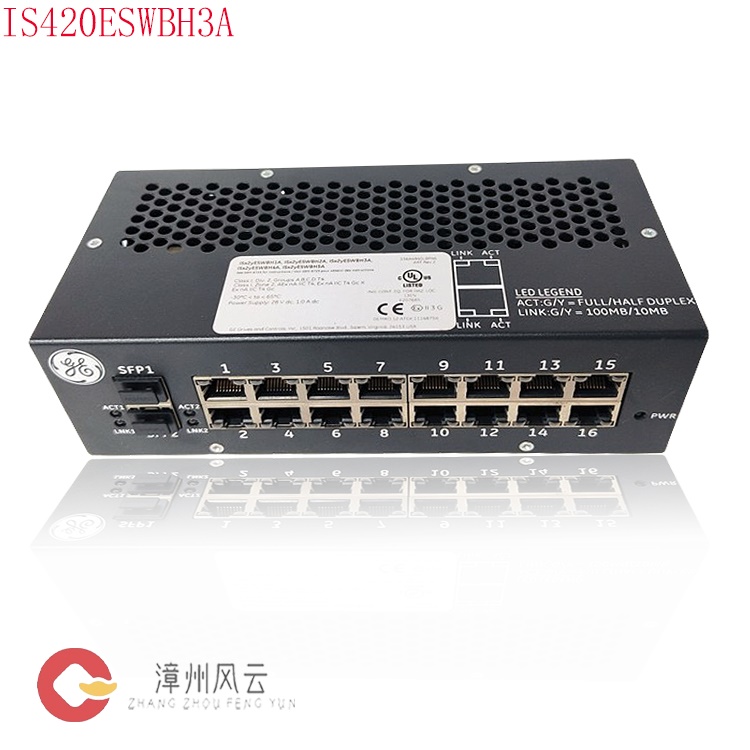
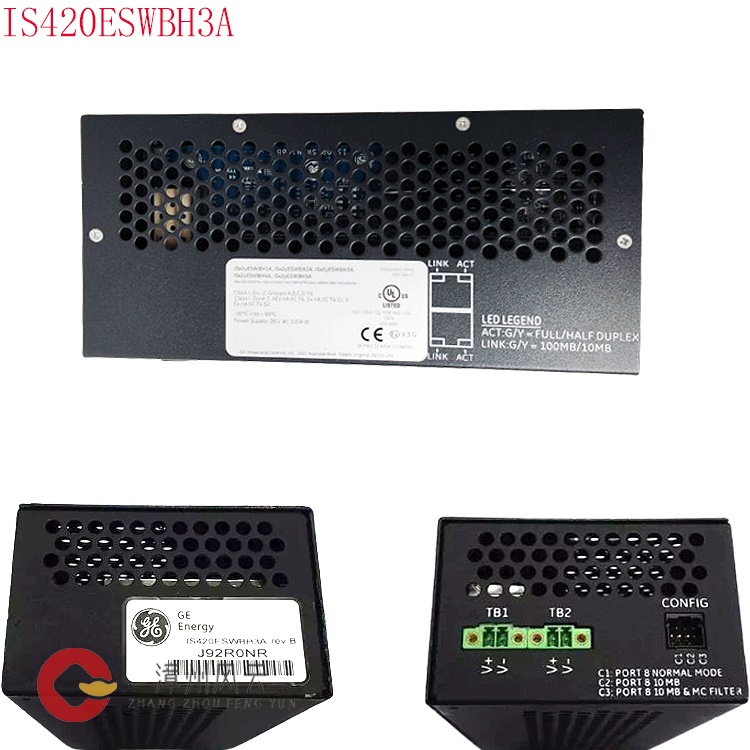
IS420ESWBH3A
IS420ESWBH3AX
IS420PPNGH1A
IS420PUAAH1A
IS420UCSBH1A
IS420UCSBH4A
IS420UCSBS1A
IS420UCSCH1A
IS420UCSCH1A-F.V0.1-A
IS420UCSCH2A-C-V0.1-A
IS420UCSCS2A-B-V0.1-A
IS420YAICS1B
IS420YDIAS1B
IS420PUAAH1A
IS420ESWBH3A
IS420UCSBS1A
IS420YAICS1B
IS420ESWBH2A
IS420ESWBESWB
IS420UCSCH2A
IS420UCSBH3A
IS420UCSBS1A
IS420ESWAH1A
More......
Address
Room 205, Office Building, No.1 Chaoyang North Road, Longwen District, Zhangzhou City, Fujian Province
fengyunfadacai@qq.com
Sales consultant
Miss.Green
+86 15860249102