

Technical articles
In what environments is the ABB excitation control unit 3BHE041343R0102 PCD530A102 used? What precautions should be taken before use?
Date: Nov 28, 2025 Views: 717
Environmental Requirements
Industrial Environment Adaptability
Temperature Range: Typical operating temperature is -25℃ to 60℃, with a wider temperature range (-40℃ to 70℃) available to adapt to extreme industrial environments.
Protection Rating: IP65 (dustproof and waterproof) or IP20 (standard rack mounting), meeting the protection requirements of industrial scenarios.
Electromagnetic Compatibility: Meets IEC 61000-4 standard EMC testing standards, resisting surges, electrostatic discharge, and radio frequency interference, ensuring stable operation in strong electromagnetic environments.
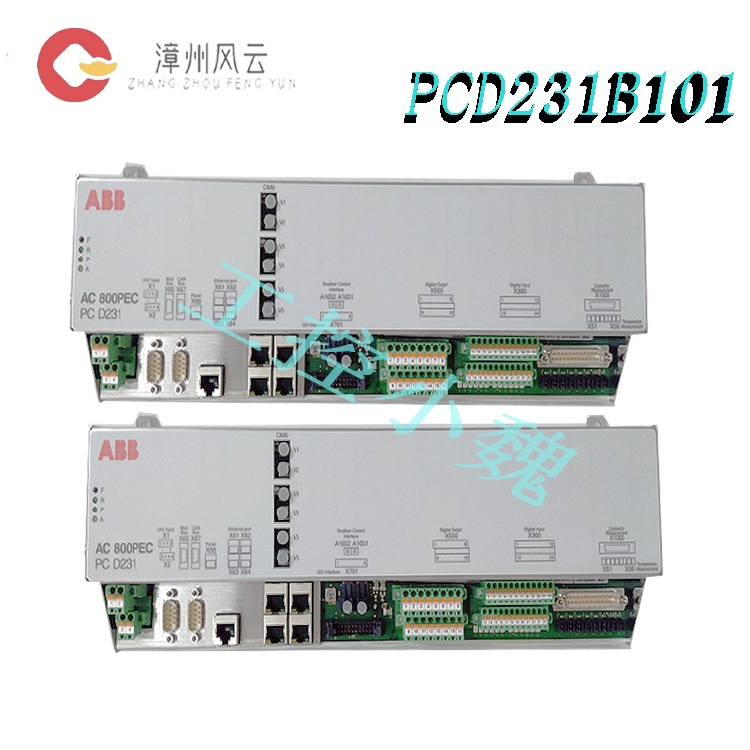
Power Supply Requirements: Input voltage 100-240V AC, fluctuation ≤ ±5%, redundant power supply configuration is recommended to support dual-channel switching; 24V DC logic power supply must be stable, grounding resistance ≤ 1Ω.
Communication and Integration Capabilities
Protocol Compatibility: Supports Ethernet/IP, Modbus TCP/RTU, Profinet, IEC 61850 MMS/GOOSE, and OPC UA, seamlessly integrating with ABB 800xA systems, DCS/SCADA platforms, and third-party devices (such as PLCs and HMIs).
Interface Configuration: Ethernet, USB, RS232/485, and fiber optic redundant ring network (switching time ≤20ms), supporting remote diagnostics, parameter modification, and firmware upgrades.
Applicable Environment
Power Industry
Power Generation Scenarios: Excitation control of coal-fired/gas-fired/hydropower synchronous generators, optimizing dynamic balance between power generation and load in conjunction with turbine speed governors to improve grid connection stability; supports black start capability for rapid excitation recovery after grid faults.
Grid Support: Dynamic reactive power compensation in substations to enhance grid voltage stability; compatible with medium and high voltage frequency converter systems (such as the PCS 6000 series) to achieve power quality optimization.
Renewable Energy: Wind/PV grid-connected scenarios, adjusting excitation strategies to adapt to intermittent power supply characteristics and reduce reactive power losses.
Industrial Sector
Metallurgy/Petrochemical: Reactive power optimization for electric arc furnaces, rolling mills, and compressor/pump loads, reducing reactive power losses and stabilizing motor speed; adaptable to high-load, high-impact scenarios (such as peak starting current in rolling mills).
Rail Transit: Metro traction converters and electric locomotive traction systems, achieving smooth acceleration/braking and regenerative braking energy feedback.
Infrastructure: Scenarios requiring high availability, such as port logistics (stall cranes, conveyor systems) and airport baggage handling systems.
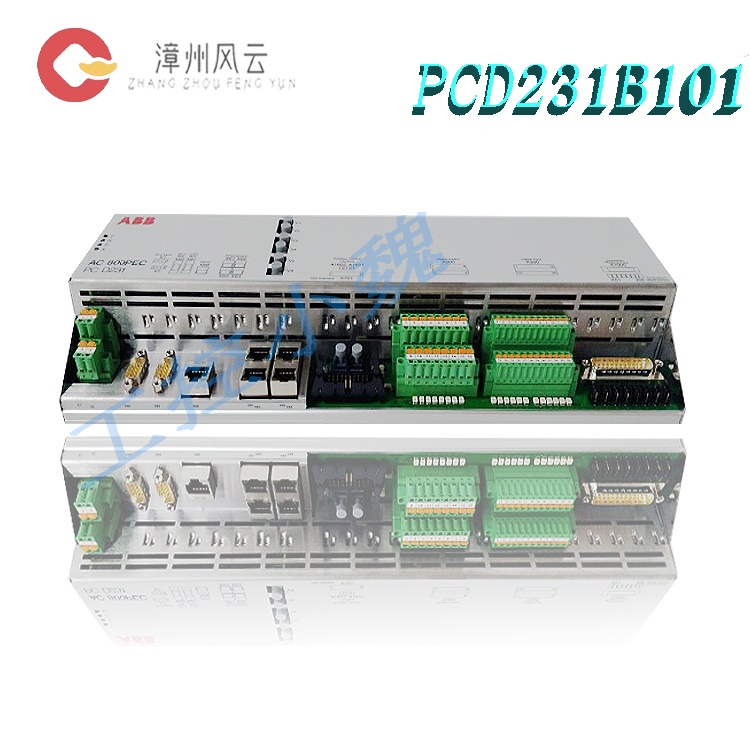
Special Industrial Scenarios
High Temperature/High Humidity Environments: IP20 protection rating (compliant with IEC 60529 standard) and wide temperature design (operating temperature 0~60℃, storage -40~85℃), adaptable to harsh industrial environments.
Strong Electromagnetic Interference Scenarios: EMC tested (IEC 61000-4 standard), resistant to surges, electrostatic discharge, and radio frequency interference, ensuring signal stability.
Key Precautions Before Use
Installation and Physical Environment
Mechanical Installation: Module dimensions are 220mm × 73.5mm × 373mm, weight approximately 1.5~2kg. It must be fixed to a standard rack rail. The control cabinet must have sufficient space for heat dissipation (top/side clearance ≥ 120mm) to avoid obstructing the cooling fan.
Power Supply Specifications: Uses 24V DC power supply (fluctuation ≤ ±5%). Redundant power modules are required. Power input must be purified by a filter to prevent electrical noise interference. Grounding resistance ≤ 1Ω to ensure safe grounding.
Line Inspection: Before powering on, verify the power supply voltage, grounding resistance, and wiring tightness. Use a multimeter to test the insulation resistance (≥ 50MΩ). Avoid parallel wiring of signal lines and high-voltage lines to reduce electromagnetic interference.
Environmental Control: Operating temperature 0~60℃ (optional -40~70℃ wide temperature range model), humidity ≤ 95% non-condensing. Avoid operation in high temperature, high humidity, dusty, and strong electromagnetic interference environments.
Electrical and Communication Configuration
Signal Interface: 24V DC digital output to drive the excitation winding (current capacity ≥ 5A), supports PWM pulse triggering; 10V DC monitoring interface for excitation current feedback (accuracy ≤ ±0.5%).
Communication Protocol: Integrates Ethernet/IP, Modbus TCP/IP, Profibus-DP, IEC 61850, etc., compatible with OPC UA standard; requires verification of communication parameter consistency (e.g., IP address, baud rate) with host computer (e.g., DCS/SCADA system) and third-party devices (e.g., PLC, HMI).
Redundancy Design: Enables dual-channel hot standby mode, primary/standby channel switching time ≤ 20ms; configuration data synchronization cycle ≤ 1ms, ensuring seamless switching in case of failure.
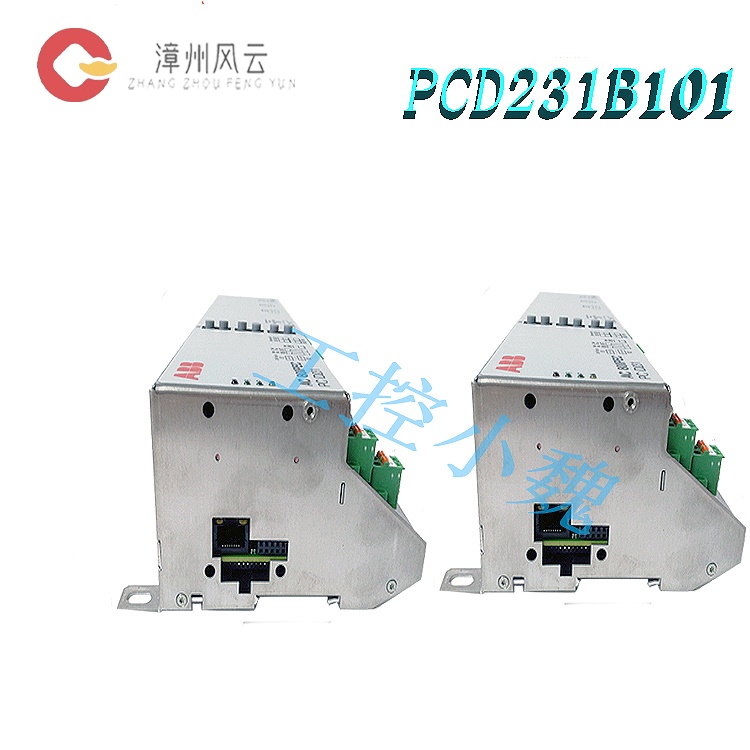
Functional Parameters and Debugging
Excitation Control Algorithm: Based on PID closed-loop control, PID parameters (proportional gain, integral time, derivative time) need to be tuned according to generator parameters (e.g., excitation current range 1.0kN); supports switching between constant voltage, constant power factor, and constant reactive power modes. Protection Threshold Settings: Configure overvoltage/undervoltage, overcurrent, and frequency anomaly protection values. Upon triggering, automatically execute fast demagnetization and circuit breaker tripping. Event logs must be recorded using the COMTRADE fault recording function.
System Integration and Commissioning: After startup, observe the LED indicators (RUN/ALARM/TRIP), test the excitation current regulation accuracy (error ≤ ±0.5%) and communication data transmission rate (≥10Mbps); perform full system integration and commissioning with the generator and speed controller to verify grid connection stability and black start capability.
Commissioning Procedure: Before powering on, check the power supply voltage, grounding resistance, and wiring tightness; after startup, verify the LED status lights (RUN/ALARM/TRIP), test the excitation current regulation accuracy and communication data transmission rate; perform full system integration and commissioning to verify grid connection stability and black start capability.
Maintenance and Troubleshooting:
Regular Inspections: Check the power module, connection lines, and communication interface status quarterly; perform firmware upgrades and performance calibration annually to ensure the system meets the latest safety standards.
System Integration and Commissioning: Fault Diagnosis: Utilizes self-diagnostic functions to locate fault points and analyzes causes based on fault logs; ABB technical support provides spare parts and on-site commissioning services, supporting remote monitoring and predictive maintenance.
Safe Operation: Complies with IEC 61508/61511 functional safety standards. Before power-off operations, ensure no residual voltage and use insulated tools and protective equipment; avoid operation in high-temperature, high-humidity, or strong electromagnetic interference environments.
Compatibility and Expandability
Third-Party Integration: Verifies communication protocols and electrical parameter compatibility with third-party devices to avoid signal conflicts or false triggering of protection; supports modular expansion (such as I/O modules, safety function modules) to adapt to the needs of generator sets from small to large.
Redundancy Design: Dual-channel hot standby configuration, primary and backup channel data synchronization cycle ≤1ms, automatically switching to the backup channel in case of failure (switching time ≤20ms) to ensure continuous system operation.
Safety and Maintenance Specifications
Safe Operation: Before maintenance, power must be disconnected and ensure no residual voltage is present; use insulated tools and protective equipment; avoid hot-plugging modules to prevent damage to electrical interfaces.
Regular Maintenance: Monthly checks of power modules, connection lines, and communication interfaces; semi-annual cleaning of control cabinet dust to ensure unobstructed cooling fans; annual firmware upgrades (through ABB official channels) and performance calibrations (such as PID parameter optimization).
Troubleshooting: Utilizing self-diagnostic functions to analyze fault logs and quickly locate problems using LED status lights; ABB technical support provides spare parts and on-site commissioning services; in high-temperature/high-humidity environments, enhanced equipment inspections are necessary to prevent condensation-induced short circuits.
Typical Application Scenarios:
Power Industry: Excitation control of coal-fired/gas-fired/hydropower generators, optimizing dynamic balance between power generation and load in conjunction with turbine speed governors; dynamic reactive power compensation and black start support in substations.
Industrial Sector: Motor control and protection in metallurgy (electric arc furnaces/rolling mills), petrochemicals (compressors/pumps), cement/steel/mining industries; high-availability scenarios such as rail transit traction systems and port logistics automation control.
In summary, the 3BHE041343R0102 PCD530A102 excitation control unit, through
its high-precision control, redundant design, and open communication protocol,
is adaptable to diverse needs in industrial and power scenarios. Before use,
careful attention should be paid to installation configuration, parameter
settings, communication integration, and safety specifications. Combined with
regular maintenance and fault diagnosis, this can effectively improve system
stability and extend equipment lifespan.
Related product recommendations:
5SHX08F4502 3BHB003151P
S-073N 3BHB009884R0021
S-097H 3BHB009885R0052
S-093H 3BHB030478R0309
S-053M 3BHB012897R0003
S-073N 3BHB009884R0021
5SHY6545L0001
5SHY5055L0002
5SHY5045L0020
5SHY4045L0004
5SHY4045L0003
5SHY4045L0001 3BHE009681R0101
5SHY35L4520
5SHY35L4512 3BHE014105R0001
5SHY35L4503
5SHY3545L0016
5SHY3545L0014 3BHE039203R0101
5SHY3545L0010 3BHE009681R0101
5SHY3545L0005
5SHY3545L0009 3BHB013085R0001
5SHX2645L0004 3BHL000389P0104
5SHX2645L0002 3BHE009681R0101
5SHX2645L0004
5SHX1060H0003 3BHB020538R0001
5SHX08F4502
5SHX0660F0001 3BHL00386P0101
More......
RELATED ARTICLE
Address
Room 205, Office Building, No.1 Chaoyang North Road, Longwen District, Zhangzhou City, Fujian Province
fengyunfadacai@qq.com
Sales consultant
Miss.Green
+86 15860249102