.jpg)
.jpg)
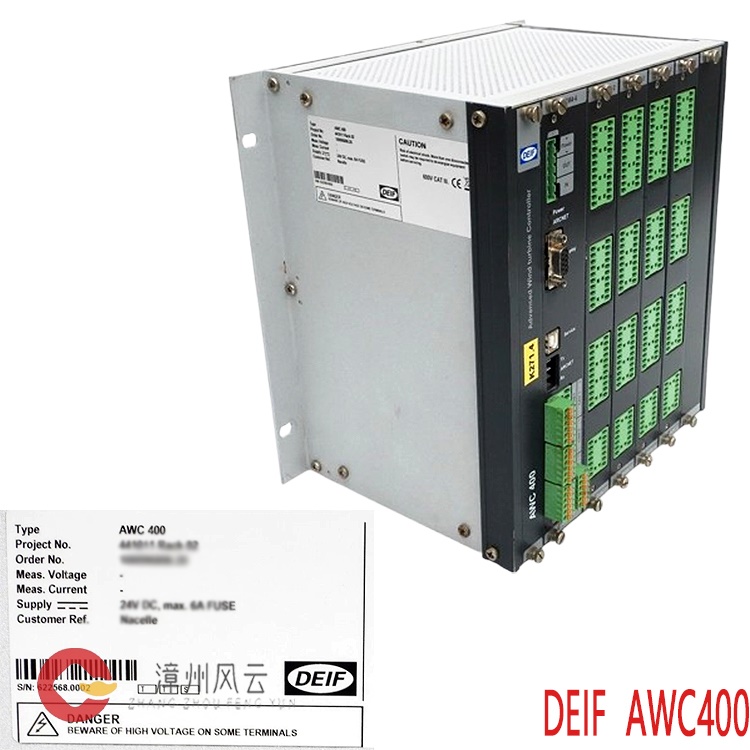
It receives voltage, frequency, and phase data collected from each generator unit (DGU), performs synchronization condition judgment, outputs closing permission commands, and uniformly regulates active/reactive load distribution strategies under parallel operation, executing priority tripping, tiered unloading (non-critical load shedding), faulty unit disconnection, and black start logic. It also summarizes alarms from all auxiliary equipment, generators, and switchboards; and generates a fault sequence log.
Many products are not yet listed. Please contact us for more product information.
If the product model differs from the displayed image, the model number shall prevail. Please contact us for specific product images; we will arrange to take photos in our warehouse for confirmation.
We have 76 shared warehouses worldwide, so it may sometimes take several hours to accurately return the information to you. We apologize for the inconvenience. Of course, we will respond to your inquiries as soon as possible.
I.
Core Control Functions (Overall Unit Business Functions)
Centralized Power Management for the Entire Ship Power Station (PMS Main Logic)
Coordinates the operating status of all generator units, uniformly executing load allocation, paralleling, disconnection, and start-up/shutdown logic;
Automatically calculates the optimal number of operating units based on the total grid load, realizing unit start-up/shutdown scheduling, load sharing, and heavy/light load protection.
Synchronization and Grid Connection Control Calculations
Receives voltage, frequency, and phase data collected from each generator unit (DGU), completes synchronization condition judgment, and outputs closing permission commands;
Unified control of active/reactive load allocation strategies under parallel operation.
Power Grid Fault Management and Protection Coordination
.jpg)
Monitor power grid loss, low frequency, over frequency, overvoltage, undervoltage, and short circuit interlock signals;
Execute priority tripping, graded unloading (non-critical load shedding), faulty unit disconnection, and black start logic.
Operating Mode Switching Management
Automatic/manual switching between sea navigation mode, port mode, port entry/exit mode, and emergency mode, loading corresponding load limits and unit operation strategies.
System Alarm, Event Logging, and Centralized Status Processing
Summarize alarms from all auxiliary machines, generators, and switchboards; generate fault sequence logs;
Forward measured values and alarm information to the upper-level engine room monitoring system and the bridge display terminal.
II.
Communication and Data Interaction Functions
Exchange analog and digital signals with local I/O boards via the VME bus;
Communicate with each generator DGU unit and switchboard protection device via the serial bus;
Provide external data links, interfacing with the engine room monitoring system, bridge control panel, and printer (event printing).
III. Hardware Platform Capabilities (PEP Modular Computer Basic Capabilities)
.jpg)
VMPM 68KA CPU Board: Real-time computation and execution of DEIF PMS control programs;
VMEM S1 Memory Module: Program, parameter, and event cache storage; backup battery maintains parameters without power loss;
Supports expansion with various VME I/O cards: Switch input/output, AC sampling, communication interface cards;
Hard real-time operating system, meeting the millisecond-level logic response requirements of ship power control.
Application Scenarios
I.
Commercial Ships (Most Mainstream Application)
Bulk Carriers, General Cargo Ships, Container Ships
Multiple auxiliary power station configurations require automatic unit scheduling, load sharing, graded unloading, and switching between navigation/port modes; centralized PMS master control in the engine room.
Oil/Chemical Tankers, Product Tankers, Chemical Tankers
High requirements for power grid stability and fault interlocking protection; ASM-C-400 acts as the central coordination unit, executing fault decoupling, priority tripping, and black start logic.
Ro-Ro ships, passenger ro-ro ships, ferries
Highly fluctuating power loads and frequent port entries and exits require rapid load management and multi-mode automatic switching.
Tugboats, port operation vessels, pilot vessels
Multiple auxiliary engines + bow thrusters result in significant load impacts; centralized power dispatching prevents grid overload.
Large fishing vessels, deep-sea fishing and processing vessels

Onboard cold storage and processing equipment experience drastic load fluctuations, requiring continuous and stable power plant management.
II.
Offshore Engineering and Offshore Facilities
OSV (Offshore Supply Vessel), platform support vessels, multi-purpose offshore vessels
Commonly equipped with DP (Dynamic Positioning) systems; stringent power plant reliability requirements; ASM-C-400 coordinates multiple generator sets to position the load.
Offshore drilling platforms, mobile offshore production facilities (early platform projects)
Self-propelled platforms, barge-mounted offshore modular power plant centralized control.
Note: Newly built offshore platforms have all been converted to distributed PMS; this type of system is only available on older vessels and platforms.
III.
Specialized Vessels
Research Vessels, Oceanographic Survey Vessels
These vessels carry a large amount of sophisticated scientific research equipment, requiring stable power grids and rapid fault handling.
Engineering Vessels: Crane Vessels, Pipeline Laying Vessels, Dredgers
Engineering machinery experiences massive short-term impact loads, relying on a central computer for load prediction, automatic generator increase/decrease, and prevention of low-frequency tripping.
IV.
System-Level Application Boundaries (Key Differentiation)
✅ Applicable System Architecture: Delomaic Centralized PMS Solution
Architecture Mode: One ASM-C-400 central computer + underlying DGU generator controllers
The central computer handles unified load allocation, synchronization licensing, hierarchical offloading, and mode management;
The DGU is only responsible for single-unit speed and voltage regulation and local control of circuit breakers.
❌ Not Applicable Scenarios
The new generation of distributed DEIF PMS (Delomatic 3/4, PPM300, iE series) does not have an independent central computer and does not require ASM-C-400;
Small vessels (1-2 generators) generally do not require a centralized central computer;
Onshore power plants, wind power, and general industrial automation (although the hardware platform is theoretically feasible, the DGU 0009 firmware delivered by DEIF only fixes the marine PMS logic and cannot be directly applied).
Recommended
related products:
DEIF
DQ144-C
DEIF DGU
0008
DEIF WC
400
DEIF
TRI-2
DEIF
LINE 300
DEIF DGU
0001
DEIF DGU
0003
DEIF
PPU/GS
DEIF
8027.9
DEIF
TDG-210DG/2
DEIF
MTR-3
DEIF
XL96
DEIF
AGC150
DEIF
MTR-3R
DEIF
BW192
DEIF
BW144
DEIF
AGC200
DEIF
XL144
DEIF
SGC 242
DEIF
SGC 241
ROLLS-ROYCE-H1111.0104
ROLLS-ROYCE-H1111.0102
ROLLS-ROYCE-H1127-0101
ROLLS-ROYCE-H1111.0103
More......
.jpg)
.jpg)
Address
Room 205, Office Building, No.1 Chaoyang North Road, Longwen District, Zhangzhou City, Fujian Province
fengyunfadacai@qq.com
Sales consultant
Miss.Green
+86 15860249102