

Alphabet's 160% increase in one year reflects its value in "owning most of the technology stack" in the field of artificial intelligence.
Date: May 23, 2026 Views: 4798
Alphabet briefly outperformed Nvidia in after-hours trading this week, with the company's market capitalization surging—a remarkable achievement for a company initially considered extremely risky during the early stages of the AI boom.
Google's stock price has risen approximately 160% over the past year, largely driven by a growing perception on Wall Street that Google is well-positioned in the AI field, whether through its self-developed models, its vast distribution network, or its cloud division which generates substantial cash from other booming AI businesses.
Among the other seven trillion-dollar U.S. tech companies, including chip design firm Broadcom, Google was the second-best performing stock over the past 12 months, with its share price rising 107%.
"Google is one of the two most dominant companies in AI because they control most of the technology stack," said Gene Munster, managing partner at Deepwater Asset Management, "including chips, models, infrastructure, and distribution channels. In addition, their profitability is quite impressive."
He categorized another company in this way: Elon Musk's SpaceX, which merged with xAI in February in a deal valued at $1.75 trillion.
Following Alphabet's earnings report last week, JPMorgan analysts named the stock their "top pick" in the technology sector, noting its "outstanding quarterly results," accelerating growth, and a near doubling of its cloud order backlog to $462 billion. Mizuho Securities analysts raised their target price, noting that the market generally expects Google Cloud's revenue and operating profit to remain significantly undervalued over the next two years.
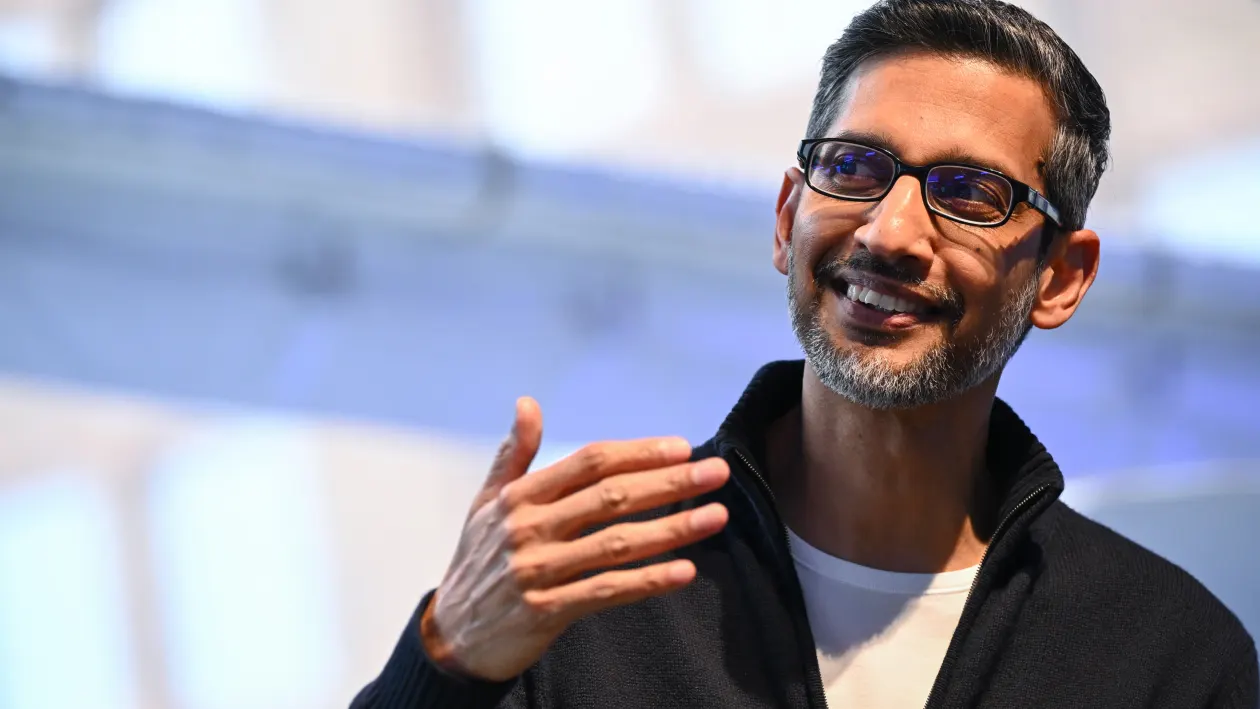
Alphabet's market capitalization closed this week at $4.8 trillion, second only to Nvidia's $5.2 trillion. After Tuesday's close, the two companies' market capitalizations briefly swapped after reports that AI model developer Anthropic had pledged to spend $200 billion over the next five years to lease 5 gigawatts of computing resources from Google Cloud.
For investors, this again demonstrates that Google has multiple revenue streams and can remain competitive in cutting-edge technologies. For example, Google can utilize Gemini and DeepMind for AI models and research, provide computing services through Google Cloud, replace Nvidia's processors with Tensor Processing Units (TPUs), and integrate AI capabilities into search, YouTube, and Android systems.
However, some analysts see skepticism in this.
The main concern is how much of the backlog likely comes from Anthropic, a cash-burning, highly valued startup that raised tens of billions of dollars from Google, much of which it then used for Google's cloud services and TPUs.
Comparing Anthropic's committed $200 billion to Alphabet's reported cloud backlog could represent more than 40% of future contract revenue.
The next prophet?
DA Davidson analyst Jill Luria says this practice is reminiscent of what happened at Oracle. The company's stock surged in September after it announced a nearly 360% increase in its backlog. It was quickly discovered that the majority of those orders came from OpenAI.
"They're doing exactly what Oracle did," Luria said, recommending holding Alphabet stock. “They told us the backlog had roughly doubled, but they didn’t tell us that almost all of that growth came from a deal with Anthropic.”
Google did not comment on the matter, only referring to comments made by CFO Anat Ashkenazy during the last earnings call.
Oracle’s stock price was hit hard after investors discovered that much of its backlog growth was related to OpenAI, with its market capitalization falling by nearly half in five months. Oracle had previously faced similar scrutiny due to its association with OpenAI.
Luria believes there is concentration risk among major cloud service providers, including Microsoft, Oracle, and Amazon. Google and Microsoft together hold nearly $2 trillion in cloud service backlogs. Luria stated that nearly half of this stems from commitments from OpenAI and Anthropic, both of which are seeking funding from the same group of companies.
Munster understands this concern, but he doesn’t agree, at least not with Google and Anthropic.
“This deal highlights that we are still in the early stages of artificial intelligence,” Munster said. “Despite limited current applications, computing demand is growing exponentially. Google will capitalize on this,” Munster said.
He added that if Anthropico falters, other AI companies will eventually replace it.
“The reports about specific customer sizes and risks miss the point,” he said. “If one customer goes out of business, dozens will take its place over time.”
Google has a clear and increasingly prominent advantage in custom chips.
Mizuho Bank estimates that Google’s approximately $61 billion cloud order backlog could stem from sales of its TPUs by 2027, with most of that revenue likely to be recognized next year. This provides investors seeking alternatives to Nvidia with another avenue for investing in AI hardware, a theme that has recently swept Wall Street, boosting AMD’s stock. Intel and Micron have both more than doubled their figures this year.
According to Luria, some of the demand for Google and Amazon (the maker of Trainium) for their self-developed chips comes from their portfolio companies.
“When Google and Amazon hype up the demand for their proprietary chips, most of it is internal demand, not organic growth,” Luria said.
Munster believes the biggest threat to Google’s continued outperformance is that its stock price has already priced in future gains. He likens this to Nvidia’s current situation: while Nvidia continues to grow rapidly, it is no longer favored by investors.
According to the London Stock Exchange Group (LSEG), analysts expect Nvidia to report 78% revenue growth when it reports earnings later this month, but the stock has only risen 15% this year, slightly outperforming the Nasdaq.
“The biggest risk of holding Google stock is that they have no opportunity to change investors’ perception of them,” Munster said.
This puts even more pressure on Google to impress at the Google I/O conference, which opens in less than two weeks. Google needs to clarify its proxy strategy with Gemini and demonstrate its ability to generate sustainable revenue from the broader AI ecosystem.
Google has quickly risen from a laggard in AI to a leader in infrastructure. Alphabet now projects capital expenditures of up to $190 billion this year, more than double its 2025 capital expenditure plan. To ensure a return on investment for its investors, Google cannot afford any mistakes.
Argus analysts noted in a report following the earnings release that
"Alphabet's capital expenditure risk is significant." However, they maintained
their buy rating on the stock, believing the company has the capacity to bear
these expenditures, a "competitive advantage" that companies like OpenAI do
not.
Warehouse discount product recommendation:
RELATED NEWS
Address
Room 205, Office Building, No.1 Chaoyang North Road, Longwen District, Zhangzhou City, Fujian Province
fengyunfadacai@qq.com
Sales consultant
Miss.Green
+86 15860249102