.jpg)
.jpg)
Supports multi-source inputs, including bus signals, analog signals (4–20 mA/±10 V), and digital pulses. It acquires raw signals from external sensors—such as rudder angle, compass, speed log, echo sounder, wind speed, main engine RPM, propeller pitch, and azimuth thruster angle—and processes them. Alarm and I/O expansion capabilities are available via optional modules (AX1/DX1/NX2), enabling analog signal acquisition, digital DI/DO, and relay alarm outputs. Threshold-based alarms can be configured to trigger audible and visual bridge alarms for conditions such as excessive rudder angle, high wind speed, or abnormal RPM.
All products on this site are specialized items subject to fluctuating market prices.
Actual pricing is based on the quote provided by customer service; listed prices are indicative only.
Please confirm the model, product specifications, and pricing with customer service before placing an order.
Please contact customer service for details regarding available units.
1.
Operating Principle
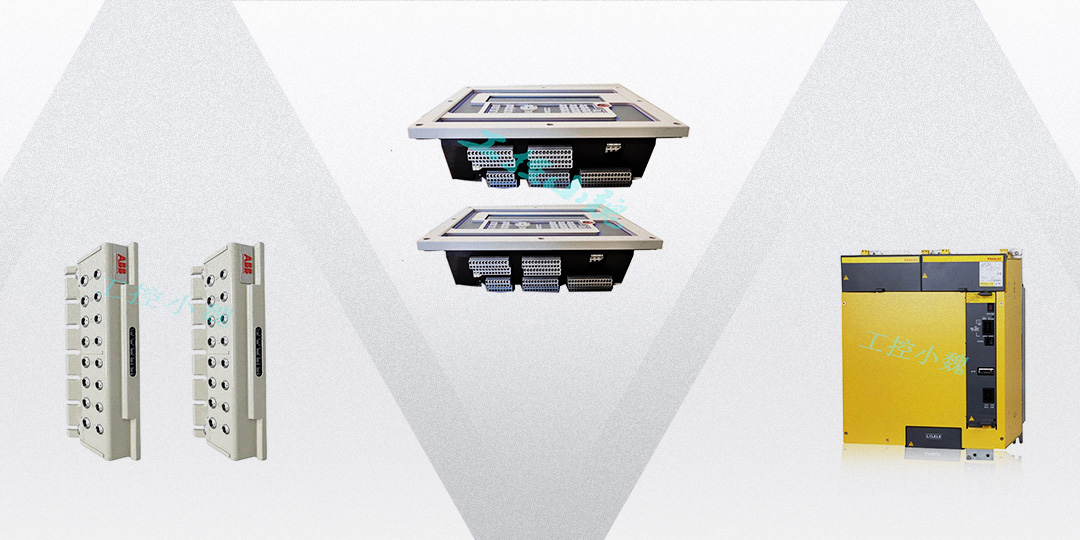
The AGI 107-2 1241000011A is essentially a networked virtual graphic display instrument. It eliminates traditional mechanical pointers in favor of a TFT backlit screen that loads a built-in "Virtual Indicator (VI) Library" to simulate analog gauge and digital readout interfaces.
Data Acquisition: Supports multi-source inputs, including bus data, analog signals (4-20mA/±10V), and digital pulses. Raw signals from external sensors—such as rudder angle, compass, log, depth sounder, wind speed, main engine RPM, propeller pitch, and azimuth thruster angle—are collected and fed into the instrument.
Data Processing: An internal MCU processes received data via filtering, offset correction, unit conversion, and true heading/true wind calculations. It supports a three-level data priority fallback system; if the primary signal is lost, the system automatically switches to a backup data source to ensure uninterrupted navigation display.
XDi-Net Network Synchronization (Core Feature): Dual CAN ports form the XDi-Net bus network. Calibration needs to be performed on only one instrument in the network; all XDi instruments across the network automatically synchronize calibration parameters, significantly reducing commissioning workload. Multiple instruments on the same network can support grouped linkage, synchronized dimming, and synchronized screen switching.

Flexible Virtual Display: The screen display is not based on fixed hardware scales but on a configurable virtual indicator library containing hundreds of pre-stored gauge layouts. A single screen can be configured to display up to two independent parameters simultaneously (Dual Display mode), and up to four display groups can be preset for one-touch switching—allowing users to toggle between interfaces for rudder angle, heading, speed, water depth, RPM, etc., as needed. Backlight Dimming: Supports multiple dimming methods—including panel buttons, external potentiometers, analog signals, NMEA, and CAN bus—to meet bridge brightness requirements for day and night navigation; optional IP66 front-panel waterproofing.
Power Supply: Redundant dual power inputs ensure continuous operation even if one ship-power line fails, meeting maritime safety standards.
II.
Core Functions
Dual-Parameter Display: Simultaneously displays two independent measurements on one screen (e.g., rudder angle + rate of turn; speed + depth; RPM + propeller pitch; wind direction + wind speed); features a simulated graphical pointer combined with a high-precision digital readout, eliminating parallax error.
Navigation-Specific Data Processing (Exclusive to NAVI version)
NMEA 0183 Bidirectional Communication: Supports up to 6 NMEA inputs and 4 NMEA outputs; reads navigation data such as compass heading, speed (SOG/STW), depth, rate of turn (ROT), relative/true wind, and GPS position; calculates true heading and true wind; supports data averaging and offset compensation.
Library of virtual navigation instruments: Includes displays for heading repeater, rate of turn, speed, depth, wind conditions, and more.
Multi-Screen Mode Switching: A single unit supports up to 4 preset screen configurations, switchable via manual control, automatic trigger, or CAN bus command; for example, a tugboat can switch parameter screens with a single touch between harbor operation, open-sea navigation, and DP (Dynamic Positioning) modes.
.jpg)
XDi-Net Networking: Dual CAN interfaces supporting CANopen and XDi-Net protocols; enables multi-instrument networking with data sharing, synchronized dimming, and linked screen grouping; calibration on one unit synchronizes the entire network; if one instrument fails, the others continue to operate independently. Alarm and I/O Expansion (Optional Modules AX1/DX1/NX2): Installing expansion modules enables analog signal acquisition, digital DI/DO, and relay alarm outputs. Threshold-based alarms can be configured to trigger bridge-based audible and visual alerts for conditions such as excessive rudder angle, high wind speed, or abnormal rotational speed.
Universal Instrument Replacement and Maintenance: Instruments of the same model serve as interchangeable spares; they can be replaced directly on board. Configuration for virtual indicators is loaded via USB, allowing replacement in minutes without the need for custom-ordered mechanical gauges of varying specifications. A built-in USB service port supports library upgrades and the export/import of configurations.
Day/Night
Display Color Schemes: Pre-set color schemes for day and night modes are
included; the night mode features a low-brightness red-and-black palette
designed to protect the operator's night vision.
III. DEIF AGI 107-2 1241000011A Application Scenarios
1. Tugboats (Typical application, including electric/hybrid tugs)
Harbor berthing/unberthing operations: Dual display of rudder angle and Rate of Turn (ROT); monitoring of azimuth thruster angle and RPM, as well as CPP pitch and main engine RPM.
Mode switching: One-touch screen switching between preset modes—harbor maneuvering, open-sea navigation, and DP (Dynamic Positioning). The *ZeeTug*—the world's first all-electric, zero-emission tugboat—utilizes the DEIF AGI 107-2 1241000011A.
Bridge wing remote control stations: Networking multiple XDi units via XDi-Net across port and starboard bridge wings, ensuring data synchronization and linked brightness control.
2. Offshore vessels and DP vessels (Platform Supply Vessels/PSVs, construction vessels, salvage vessels)
DP bridge monitoring: Heading, speed (SOG/STW), water depth, relative/true wind, and Rate of Turn (ROT); retransmission of DP system NMEA data.
Propulsion monitoring: Monitoring of bow thrusters and azimuth thrusters (angle and RPM); real-time monitoring of vessel attitude and display of wind/wave parameters during operations.
Alarms: With the addition of NX2/DX1 expansion modules, the system outputs alarms for wind speed limits, rudder angle limits, and shallow water depth thresholds.
3. Conventional merchant vessels (Container ships, tankers, bulk carriers, general cargo ships)
Bridge navigation instrument console: Replaces legacy discrete mechanical gauges; displays heading (repeater), speed, water depth, wind direction/speed, and rudder angle.
Bridge wing rudder angle repeater: Handles dual rudder angle signals (main and emergency); automatic signal priority switching (switches to backup if the main signal is lost).
Retrofitting: Suitable for vessel upgrade projects requiring a compact installation of AGI 107-2 1241000011A units. Replaces numerous single-function analog gauges; reduces panel cutouts and the variety of spare parts required.
4. Passenger ships, yachts, and high-speed vessels
Passenger ship bridge: SOLAS/MED compliant; displays navigation and meteorological data; features day/night (red/black) eye-friendly display modes.
Luxury yachts / High-speed vessels: Compact bridge panel integrating navigation and main propulsion parameters; sleek appearance; IP66-rated front panel suitable for external wing consoles.
5. Offshore platforms and floating units (FPSO, offshore wind installation platforms)
Platform bridge / Central control console: Monitors platform heading, wind speed/direction, draft, and positioning thruster parameters.
Meteorological monitoring: Connects to ultrasonic wind sensors to calculate true and relative wind; includes high-wind alarms to ensure safety during offshore operations.
6. Instrument retrofit and upgrade projects (key scenario for existing vessel upgrades)
Consolidated replacement of legacy mechanical rudder angle indicators, compass repeaters, anemometers, and depth sounders.
Compatible with existing hybrid systems (analog 4-20mA + NMEA signals); eliminates the need for extensive sensor replacement.
Simplified spare parts management: Universal model compatibility across the network; USB-based configuration import; enables rapid on-site replacement.
8. Specialized monitoring applications (customizable single-unit display configurations)
Rudder angle + Rate of Turn (ROT) (ideal for docking / maneuvering)
.jpg)
Speed + Water depth (for channel and narrow waterway navigation)
Wind direction + Wind speed (meteorological monitoring, offshore operations)
Thruster azimuth + RPM (for azimuth thrusters and bow/stern thrusters)
Main engine RPM + CPP pitch (for controllable-pitch propeller vessels)
Summary of applicable vessel types
Tugs, all-electric vessels / Hybrid tugs, Platform Supply Vessels (PSVs), offshore engineering vessels, DP vessels, container ships, oil tankers, bulk carriers, Ro-Pax ferries, high-speed craft, luxury yachts, offshore wind turbine installation vessels, and FPSOs.
Unsuitable Applications
Monitoring of critical main engine parameters in the centralized control room (the XDi-Dual non-NAVI version is typically selected for this purpose); downhole environments or high-risk explosion-proof zones (unit lacks explosion-proof certification).
IV.
Summary of Key Technical Features
Positioning: A networked, software-defined marine virtual bridge indicator—not a standard single-parameter digital display; the NAVI version features enhanced NMEA navigation message processing; the Dual capability supports the simultaneous display of two parameters on one screen.
Key Advantages: Multi-purpose functionality, configurable display libraries, network-wide synchronized calibration, redundant power supply, and standardized spare parts; reduces the variety of onboard instruments and spare part inventory requirements.
Interfaces: Dual CAN, NMEA, analog/digital I/O expansion, and USB debugging port; DIN 192 panel cutout.
Recommended
related products:
DEIF
AGC 252
DEIF
VTR-3
DEIF
AGI 107-2
DEIF
GPC/GS
DEIF
TAX 312DG
DEIF
XDI144-DUAL
DEIF-HAS-2N
DEIF
CRM-1
DEIF
AOM-1
DEIF-CRM-1
DEIF-PCM3.1
XDI192
DEIF
BRW-2
200-0-200 DEIF
IMD
122A DEIF
IMD
100 DEIF
DGU 4
DEIF
AWC
400 DEIF
DEIF
DGU 0003
More......
Address
Room 205, Office Building, No.1 Chaoyang North Road, Longwen District, Zhangzhou City, Fujian Province
fengyunfadacai@qq.com
Sales consultant
Miss.Green
+86 15860249102