.jpg)
.jpg)
Providing gaseous power for industrial processes. In wastewater treatment, the aeration system accounts for more than 50% of the energy consumption of the entire production line, and the blower directly determines the energy efficiency level. It is also used for material conveying, combustion assistance, and cooling. A single high-efficiency blower is the energy efficiency anchor of the entire production line.
Many products are not yet listed. Please contact us for more product information.
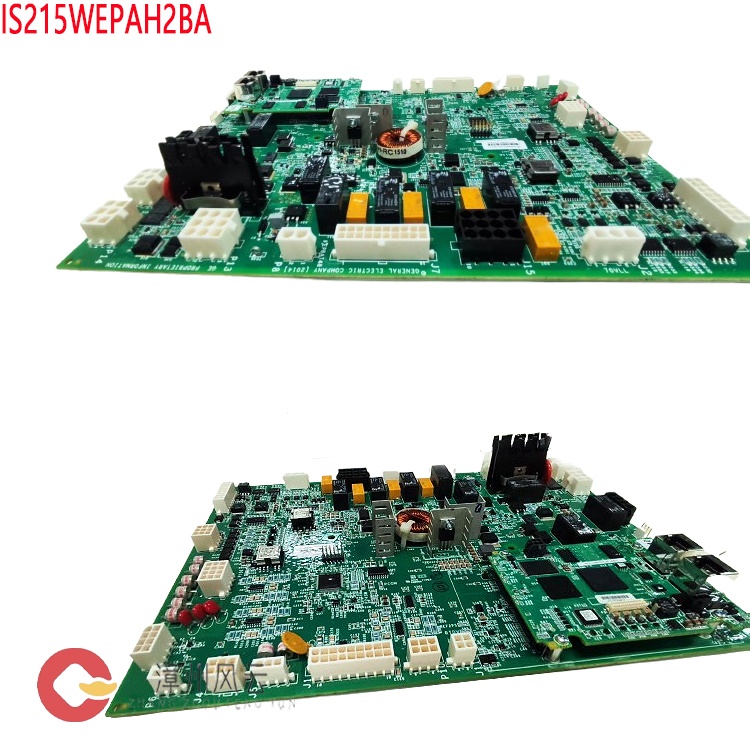
If the product model differs from the displayed image, the model number shall prevail. Please contact us for specific product images; we will arrange to take photos in our warehouse for confirmation.
We have 76 shared warehouses worldwide, so it may sometimes take several hours to accurately return the information to you. We apologize for the inconvenience. Of course, we will respond to your inquiries as soon as possible.
I.
Blower Section
Function: The core function of the blower is to convert electrical energy into air kinetic energy, achieving directional gas delivery, pressurization, and ventilation. Specifically, this includes: precisely controlling airflow output, maintaining stable system pressure, and providing air power for the process.
Applications
Providing combustion-aiding air supply for burners, boilers, and other equipment
Providing aeration and mixing for wastewater treatment ponds
Providing compressed air for pneumatic systems
Serving as a power source in vacuum paper feeding, pneumatic conveying, and other scenarios

Application Areas
Metallurgical industry, chemical plants, organic fertilizer, petrochemicals, food processing, building materials, mining, textiles, gas stations, powder conveying, wastewater treatment, etc. In CNC machine tools, blowers are commonly used for spindle cooling, electrical cabinet heat dissipation, and chip removal from the cutting area.
Technical Features
Dimensional Explanation
Working Principle: The rotor operates eccentrically, and the volume change between the blades achieves intake-compression-exhaust; or a centrifugal impeller rotates at high speed to generate centrifugal force for pressurization.
Adjustment Methods: Variable frequency speed control (mainstream), inlet guide vane adjustment (power saving of over 17% under partial load), throttling adjustment.
Bearing Technology: Three generations of technologies coexist: general mechanical bearings, magnetic levitation bearings, and air levitation bearings.
Efficiency Characteristics: Volumetric operation, flow rate varies with speed, wide pressure selection range, and minimal mechanical friction loss.
Vibration Control: The rotor is statically/dynamically balanced, and with the help of rubber shock absorbers, vibration hazards can be minimized.
.jpg)
Key Technical Points:
Eccentric rotor operation, volume change between the blades achieves intake-compression-exhaust, which is a volumetric principle.
Mechanical friction loss Minimal contact, with only bearings and gear pairs in contact, resulting in high volumetric efficiency.
The rotor undergoes static/dynamic balancing, resulting in low vibration and low noise.
Speed control methods include: imported guide vane adjustment (energy saving of over 17% under partial load), frequency conversion adjustment, and diffuser adjustment.
High-end trends include: magnetic levitation bearings (contactless, lubrication-free, long lifespan), air-suspended bearings, and single-stage high-speed centrifugal technology.
In 2021, domestic production of Roots blowers reached 12,569 units, a year-on-year increase of 24.64%, with the industry evolving towards high efficiency, oil-free operation, and wide coverage.
Impact on the industry:
"Dual-carbon" driving energy-saving upgrades: In 2021, domestic production of Roots blowers reached 12,569 units, a year-on-year increase of 24.64%. The industry is developing from single-stage high-speed to a full range of high/medium/low pressure ratio blowers, with high efficiency and oil-free operation being the mainstream direction.
Magnetic/air-suspended technology replaces traditional mechanical bearings, saving over 5% in energy and significantly extending lifespan, reshaping the blower industry landscape.
Domestic substitution is accelerating: Leading domestic enterprises are continuously increasing their R&D investment, narrowing the technological gap with foreign brands. Industry analysis in 2022 indicated that domestic companies are seizing the domestic market and expanding into the international market.
II. Power Supply Module
Section
Functions
The power supply module does not have energy storage capabilities. Its core function is voltage and current conversion: converting the input power supply into a stable DC voltage required by the equipment (such as +5V, +15V, -15V, +24V, -24V, 600V DC, etc.), while also undertaking the responsibilities of transformation, isolation, filtering, and voltage regulation.
Purpose
Provides a clean and stable operating power supply for control units such as CNC systems, servo drives, and PLCs.
.jpg)
Isolates grid interference, protecting downstream sensitive electronic components.
Monitors the power supply status and outputs "ready," "enabled," and "fault" signals to the upper-level control system.
Application Areas
Railway, power, communications, aerospace, automotive, shipbuilding, electronic information, new energy, industrial control, fire protection, instrumentation, medical, and vehicle-mounted transportation. In CNC machine tools, the power supply module is a core component of systems such as the 840D/828D, directly determining the overall reliability of the machine.
Technical Features
Dimensional Description
Topology: PFC+LLC resonant (current mainstream high-efficiency solution), efficiency reaches 92%~94%
Power Density: Gallium Nitride (GaN) solution achieves 3.75W/cm³, 14-layer high-density PCB process
Interface Signals: X111 "Ready", X121 "Enable", X141 Normal Operation Output, X171 Precharge Control, X172 Startup Inhibition, X181 Power Supply Port (600V DC / 380V AC)
Standardization: Railway EN 50155, Communication EN 55022, Power EN 62040, Medical EN 60601
Development Direction: Miniaturization, Modularization, Chip-based, High Integration, High Precision, High Reliability, Low Power Consumption
Impact on the Industry
Modular power supplies are the foundation of industrial automation: without stable power modules, CNC, servo, and PLC cannot function; it is the "first mile" of the entire intelligent manufacturing chain.
Gallium nitride (GaN) technology is rewriting industry rules: By 2025, 500W-class GaN AC modules will be in mass production, boasting 94% efficiency, a size of only 145×61×15mm, and a weight of 182g, directly driving the evolution of power modules towards higher frequencies, higher densities, and lower temperature rise.
There is huge potential for domestic substitution: While Europe, the US, and Japan still hold an advantage in the high-end power module market, Chinese companies are gaining market share through design improvements and cost control, further supported by favorable policies (multiple industry support policies).
Environmental regulations are forcing upgrades: Certification requirements such as EU ISO 14000 and US UL are driving compliance throughout the entire product lifecycle, from production to recycling, accelerating the elimination of outdated production capacity.
III.
Synergistic Value of the Combination
The blower provides pneumatic power, and the power module provides electrical power. Together, they form a "pneumatic-electric" dual infrastructure in CNC machine tools and industrial automation equipment:
Combined Value Dimensions
Reliability: Stable power module → constant blower speed → consistent airflow/pressure output → guaranteed machining accuracy
Energy Saving: Variable frequency blower + high-efficiency power module (94% efficiency) significantly reduces overall system energy consumption
Maintenance: Both are designed for maintenance-free/long lifespan, reducing downtime costs
Intelligence: The power module's output status signal can be linked with the blower's frequency converter to achieve closed-loop intelligent control.
Recommended
related products:
GE
151X1233DD01SA01R
GE
151X1209AS002BSG2
GE
151X1230HA01MG01C
GE
151X1228BR02SA01
GE
151X1207BB53SA01
GE
151X1258BR01SA23
GE
151X1233DD01SA02
GE
151X1225DF01PC01
GE
151X1225EK01PC04
GE
151X1233DB02SA02
GE
151X1209WH002BQG3
GE
151X1225EK01PC03
GE
151X1215DC10SA01
GE
151X1207BB01SA01
GE
151X1219CB03SA01
GE
151X1207BC02SA01
GE
151X1207BA10SA01
GE
151X1207DG06SA01
GE
151X1225DF01PC01R3
More......
.jpg)
Address
Room 205, Office Building, No.1 Chaoyang North Road, Longwen District, Zhangzhou City, Fujian Province
fengyunfadacai@qq.com
Sales consultant
Miss.Green
+86 15860249102